Paths to Tranquility: Anxiousness Assistance with Steeds in Dexter
Walk into a quiet arena on the side of Dexter and the very first thing you discover is your shoulders going down. The air holds a mix of tidy hay, natural leather, and the soft dirt that increases when hooves murmur across sand. Steeds take a breath slower than we do. They blink more often. They fulfill you with a visibility that really feels sincere. For individuals dealing with stress and anxiety, that steadying existence can come to be a compass.
This isn't magic and it isn't a workaround for therapy that belongs in a clinician's office. It is a useful, body-first method to let the nerve system downshift. With therapeutic horsemanship and equine-assisted solutions, individuals learn to review and regulate their own signals, not via talks or worksheets, but with real-time responses from a pet that has made it through for millennia by noticing what is safe and what is not. Dexter's blend of open fields, seasonal rhythms, and a tight-knit horse area makes it an ideal place to find that steadier gait.
The quiet intelligence of horses
Horses are target animals and social animals. That combination instructs them to track the atmosphere like a radar while remaining linked to their herd. They connect with tiny changes: a swish of tail, a conditioning of the eye, a lick and eat after stress launches. They mirror, in some cases enhance, the emotional tone around them.
In human terms, this indicates you get a partner that answers your nerves, not your words. If you hold your breath and square your shoulders, a horse could stop briefly or step away. When you slow your exhale and soften your emphasis, the steed might step toward you, interested. In a healing setting, we utilize that psychophysiological feedback to exercise guideline in the moment. With time, your body learns what tranquility seems like, not as a concept, but as a lived sensation.
Why equines aid in anxious states
Anxiety frequently catches people in loopholes of overthinking, shallow breathing, and muscular tissue bracing. Reviewing a handout on coping skills rarely transforms that, because the body does not discover by reading. It learns by doing and picking up. Equine-assisted tasks offer the nerve system something concrete to address: the rhythm of cleaning, the feeling of a lead rope, the warmth of a muzzle in your palm.
The barn atmosphere likewise adds context that matters. Field work brings sufficient uniqueness to nudge the nerves right into mild activation, which is where growth takes place. Yet it remains bounded by clear policies and physical safety and security. You are not facing a class or a boardroom here, you are standing with a 1,000-pound partner that will certainly not act. He will respond to your timing, clearness, and uniformity. That fact encourages accountable threat taking, which builds confidence.
What a session in Dexter can look like
Most anxiety support with steeds in Dexter unravels in a sequence that respects both steed and human. A new client could begin in a peaceful paddock, in some cases even outside the fencing, just observing. Breath job isn't introduced as a technique. It arises normally when the practitioner asks, Would certainly you want to match the equine's breathing for 3 cycles and see what adjustments?
From there, we may relocate into pet grooming, since it offers rep without stress. Many customers report that the first full-body brush takes 10 to 15 mins and ends with both equine and human significantly quieter. Leading workouts normally adhere to. The client methods requesting for a quit and a go with small signals, then finds out to change when the steed no more follows those signals. That inequality becomes the product for mentoring: What did your body do right before he drifted off the rail? When you took a larger step, just how did he answer?
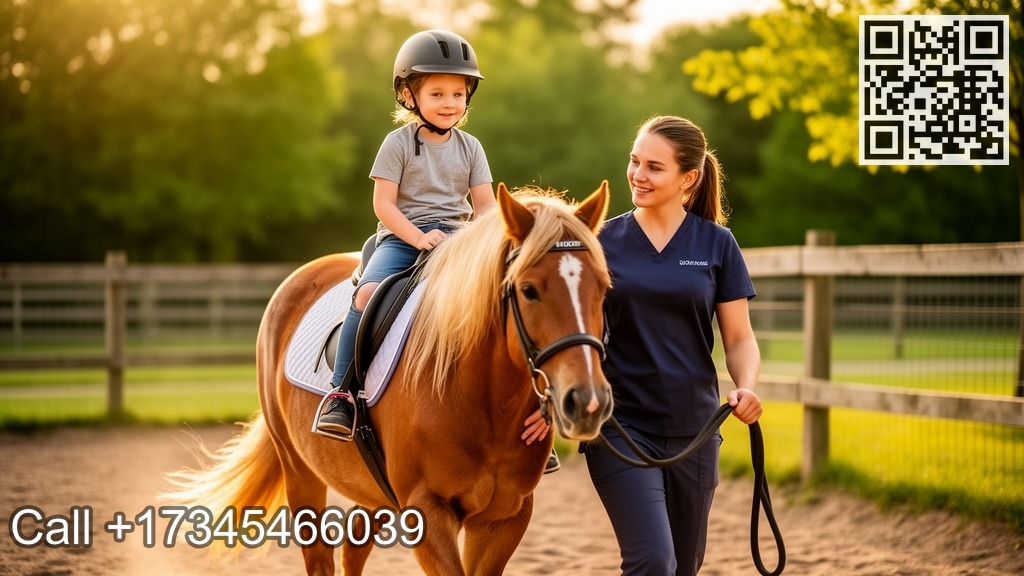
Mounted work, if it happens whatsoever, comes later and only when it includes worth. Some individuals never ever ride and still satisfy their goals. For others, the gentle sway of a stroll - approximately 90 to 110 steps per min - brings a rocking motion that can resolve over active systems, similar to the method babies relax with rhythm. Each option is customized, not formulaic.
Sessions run 50 to 75 mins, with the very first few minutes invested in a check-in and the last few mins on debrief and grounding. The pacing stays slow-moving for a factor. Many distressed clients can push with quick, yet the factor here is to sense and respond, not to conquer.
Safety, authorization, and great horsemanship
An honest program areas horse welfare and human safety and security at the core. That indicates the horses made use of in equine-assisted services turn timetables to stop fatigue, receive routine veterinarian and unguis care, and obtain downtime outdoors. It also means claiming no when problems aren't right. High winds, icy ground, or a horse who got up tight can turn a session right into a safety and security risk. In Dexter, winter season often asks us to pivot inside your home, right into a covered field, or to concentrate on groundwork that does not demand speed.
Consent runs both directions. People deserve to opt out of any kind of exercise, to go back from touch, to state, I want to view today. Steeds additionally offer permission. An expert tracks ears, eyes, and pose, and will certainly adjust if an equine shows a head toss or a limited jaw. A prepared companion discovers far better than a braced one, whether the learner is you or the gelding at the end of the rope.
Approaches we use, and why they differ
Equine-assisted services is an umbrella. Various approaches rest under it, each with its own focus.
In therapeutic horsemanship, the skills of safe handling and riding are shown with an eye towards restorative objectives. You could discover to capture, halter, lead, bridegroom, and, when appropriate, adventure at the walk and trot. Anxiety job benefits from this since the abilities require tranquil quality, and development becomes noticeable in small steps.
Equine-assisted coaching fixate goals for every day life. A coaching session might use tasks like navigating a ground post maze or relocating an equine with a pattern without a lead rope. The job exposes just how you set boundaries, take care of disappointment, and ask for assistance. It fits grownups that desire useful modification at the workplace or home and pairs well with equine-facilitated training in groups.
Equine-facilitated health ties sensing and activity to whole-person health and wellness. Specialists might cue micro-movements, like discovering the weight of your feet or the feeling of your ribs, while observing the horse's feedback. This is where somatic recovery with steeds lives. Anxiousness commonly alleviates when individuals find out to call feelings and let them relocate, not suppress them.
Equine-assisted tasks cover a bigger variety, consisting of unmounted programs for institutions, scouts, or family members. These provide available access points for those uncertain about equines. Team structure with equines commonly drops right here, using collaborative jobs to enhance communication under pressure.
None of these models claim to heal anxiety. They aid people build regulation abilities, self-confidence, and relational clarity, which after that support work made with specialists, physicians, and family members. The secret is a good match in between individual, steed, and approach.
Stories from the arena
Names and a few information altered for personal privacy, however the form of these experiences remains true.
A college student from Dexter showed up anxious, chatting fast, eyes on the ground. Her very first session finished with one hand hing on a mare's shoulder for 3 complete breaths, which seemed like a win. Over 5 weeks she found out to go back and reset when the mare pinned her ears throughout brushing. By week 8 she could ask for a crisp halt and hold it for a silent count of five. At the end of the semester she stated, I can really feel the moment before my panic spikes. That gives me choices.
A daddy in his fifties came in for anxiety management. His work required hard target dates and little rest. In the sector, he often tended to over-cue. The gelding responded by accelerating, then adjusting him out. We exercised smaller asks and waiting 2 seconds before repeating any kind of hint. He hated the waiting in the beginning. By the fourth session he laughed, saying, Turns out I rush every little thing. The week he applied the exact same two-second guideline in a strained team meeting, he felt the difference.
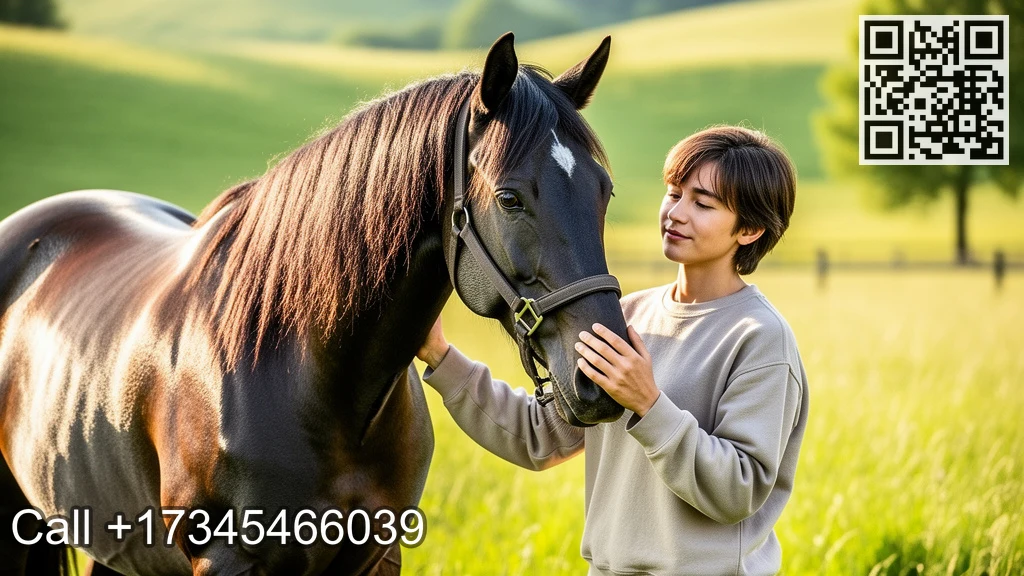
A center schooler with sensory difficulties can not stand the curry comb's audio on dry hair. We exchanged devices, slowed down the rhythm, and worked from three feet away with a long-handled brush. Gradually he moved closer. He found out to call the squeak as an audio, not a risk, and to march for a water break before overload. Alternative treatment for sensory difficulties functions finest when it honors each feeling honestly, not by pressing through.
For youngsters and teenagers: ADHD and autism supports
Children and teenagers with attention distinctions typically thrive in motion. ADHD equine discovering assistance harnesses that need for motion without reproaching it. Ask a 10-year-old to rest still and memorize a list of actions, and you shed him. Welcome him to lead a pony through four cones in a pattern, and you involve his body and brain together. Then you can call the exec feature abilities he utilized: planning, sequencing, impulse control. The horse's action gives instantaneous comments without judgment.
An autism equine finding out program leans into predictability and clear signals. Lots of neurodivergent trainees attach strongly with steeds when regimens are steady and shifts are gradual. A session could start by assessing a visual routine, then providing options: halter the horse with a blue or eco-friendly lead, brush with soft or average brush, stroll the figure or the straight line first. Those little choices construct agency. Social finding out occurs alongside, not one-on-one, which minimizes stress. Gradually, pupils practice turn taking, point of view taking, and versatile thinking, all with the equine's steady presence as a co-teacher.
Parents usually ask just how commonly to routine. For kids and teenagers, when weekly works for the majority of, in some cases two times once a week throughout college breaks. Much shorter rounds, 45 to 60 mins, beat marathons. And breaks matter. A week off for a family journey does not erase gains. The skills live in the body and come back quick when sessions resume.
For grownups: tension, burnout, and leadership
Adults bring split stress and anxiety: job, caregiving, funds, maturing moms and dads. Anxiety occurs not just from worry, however from chronic overload. Equine-assisted coaching creates a lab for leadership and border job. If you are a manager that battles to entrust, attempt asking a steed to cross a tarpaulin without pulling. It requires you to maintain your feet planted while your ask journeys plainly down the line. If your default is to quell, practice claiming no by setting a hard quit at a cone and maintaining it. The horse won't resent. He will just check, after that respect consistency.
Team building with steeds takes this set level up. A little group could be charged with moving two steeds with a program using only body setting and signals, no ropes. Certainly, a person talks excessive, somebody hangs back, and somebody tries to do all of it. Fifteen mins of organized representation afterward can shift characteristics back at the office in a way that a slide deck can not. Individuals keep in mind just how it felt to tip up or step apart due to the fact that the steeds answered them in actual time.
For solo experts and caretakers, equine-facilitated wellness uses a refuge. The body keeps score of long seasons of giving. Grounding with a peaceful mare, tracking her breath, discovering your feet, and resetting your speed constructs a reservoir you can draw from later. Clients commonly state they sleep much better the evening after a session. That tiny win matters.
Getting began in Dexter: what to expect on your first visit
- A short consumption discussion in the workplace or barn aisle, covering goals, background with animals, and any type of clinical or movement considerations
- A security orientation, including exactly how to move horses, where to stand, and what signals to see for
- A fulfill and welcome with a couple of horses that fit your character and requires, frequently over a fence first
- A low-demand activity such as pet grooming or leading at the stroll, paced to your comfort
- A short debrief with practical takeaways you can apply between sessions
Wear closed-toe shoes with a level sole, layers for Michigan's unpredictable climate, and handwear covers if your hands are sensitive to appearance. Sessions run in light rain and mild snow, but ice or tornados might prompt indoor work or a reschedule.
A simple at-home practice borrowed from the barn
- Stand with your feet hip-width, knees soft, and think of holding a lead rope with just adequate tone to maintain a gentle curve
- Inhale through your nose for a matter of four, breathe out through pursed lips for a count of 6, and repeat 3 times
- Name 5 feelings you feel today, from the weight of your feet to the temperature level on your cheeks
- Ask yourself, What is the smallest next action I can take with quality, not compel, and then take it
This mini-sequence simulates what works in the arena: tone without stress, longer breathe out, sensory naming, then one clear ask. Practice daily for 2 weeks and track what shifts.
Weather, season, and the feeling of area in Dexter
The periods shape barn life around Dexter. Spring mud brings patience and boot scrapes at every door. Horses shed winter season layers by the handful, and grooming ends up being a reflection in change. Summer season early mornings provide silent light and less flies, so earlier sessions usually match individuals vulnerable to sensory bewilder. Loss scents like apples and fresh shavings, and stress and anxiety has a tendency to ease when regimens work out after the start of school. Wintertime can be the most serene time of all. The globe smothers under snow, and the interior sector holds a cocoon of steady rhythm.
We strategy around conditions. On high-humidity days, sessions may stay unmounted with more breaks. When cold snaps make steel tack uncomfortable, foundation and freedom play take center stage. Anxiety does not clock out for weather condition, yet we can adapt so your body discovers flexibility without losing safety.
How development is gauged without turning whatever right into homework
Not whatever that matters can be graphed, however clearness aids. We track 3 kinds of indicators.
First, physical: lower resting heart rate by the end of a session compared to the begin, breath that normally extends, shoulders that go down, a jaw that unclenches. These cues show up on your face and in your posture, and your expert helps you observe them.
Second, practical: you can lead a steed on a loose line at a stroll, stop and begin with subtle cues, preserve a limit without yanking, and go back to soothe after a startle. Each of those skills mirrors a daily-life capacity.
Third, subjective: you report less panic spikes weekly, or when they occur you recoup in 5 mins as opposed to thirty. Rest boosts in the 24 hr post-session. You feel more able to claim no. We may write these down every few weeks to mark arcs of modification, not to judge.
Frequency issues, yet there is no single best number. Many individuals begin weekly for 6 to 10 sessions, then taper. Some return seasonally for a reset. We review goals and readjust. If you really feel stuck for 2 or three sessions, we alter the approach or the horse.
When equine work is not the appropriate fit
Part of moral method is naming limits. If you have extreme allergies to horses or hay, this might not be comfortable or secure. If you are in energetic dilemma or detox, a professional setup belongs initially. If you lug injury that flares into dissociation with touch or motion, you can still work with steeds, yet only with a trauma-informed specialist and clear clinical assistance. If you desire fast fixes, the barn will discourage you. Equines teach in loops and spirals. Progression resembles two advances, a time out, then one more step.
Sometimes an inequality with a certain equine masks a much deeper problem. If you really feel evaluated by an equine's refusal, you might push harder to confirm something. That press welcomes us to reduce and reframe. If slowing down really feels intolerable, that is information we can reclaim to your talk therapist.
How equine experiences enhance various other supports
Many customers set equine-assisted activities with counseling or medication. The barn becomes the lab, the workplace the location to analyze what took place. A cognitive therapist could aid you reframe a fear, then the horse gives you an area to examine that brand-new structure against your body's responses. A psychiatrist might make improvements a drug, then report that the somatic devices you find out with the equines make reduced dosages possible. Clear interaction amongst providers helps. With your approval, practitioners can share general styles and goals so everyone rows in the same direction.
Families profit as well. Moms and dads that view their kid find out a stop-and-go sign usually take on similar language at home. Pairs sometimes reserve a joint session to practice limits with a neutral 3rd party who takes place to wear unguis. The equine reflects the device, not just the person, that makes systems visible without blame.
The function of selection and voice
Anxiety usually expands in the dark when individuals feel caught. The barn flips that manuscript by offering choices at every turn. Will you work with the bay or the chestnut today? Want to start with grooming or strolling? Would certainly you like me on https://beckettnlkr855.talesignal.com/posts/sensory-smart-saddles-choice-treatment-for-sensory-challenges your left or your right? These micro-choices restore company. With time, clients begin voicing preferences more readily outdoors sessions. They request a quieter table at a restaurant. They ask for a time out in a conference. They choose which obligations can drop without the world ending.
Horses compensate clarity. If you ask with your whole body, they address. If you half-ask, they are reluctant. That lesson lands kindly from a gelding who flicks an ear and awaits you to attempt again.
Dexter's community and the long view
One stamina of Dexter is the web of neighbors who know where the good hay originates from, which vet is on phone call, and exactly how to repair a fence a pinch. That grounded, sensible society seeps into the barn. We chat clearly. We laugh when a snoopy mare unzips a layer pocket. We celebrate peaceful wins, like a teen who makes eye call with a steed for 2 secs longer than last week.
Long-term, several customers return to the barn as volunteers or participate in experiential discovering with horses past anxiety support. Some sign up with team centers focused on equine-facilitated coaching. Others enroll in weekend workshops on communication or grief. The abilities transfer. An individual who learned to lead a 1,100-pound draft cross without pulling can normally hold their own in a difficult discussion without increasing their voice.
Finding your pathway to peace
Anxiety informs you to reduce your world to avoid pain. Steeds welcome you to enlarge it safely. The sector offers you a defined area, a living mirror, and the elegance to attempt again. With each see, you pile tiny victories. Your breath evens. Your shoulders soften. Your asks get cleaner. You see earlier when your system ramps up, and you bring it down without drama.
Whether you choose restorative horsemanship to build concrete skills, equine-assisted mentoring to adjust leadership, or equine-facilitated health to grow body understanding, the through line remains easy: your nerves learns by doing. In Dexter, among equines who understand the language of herd and home, there is room to practice until simplicity really feels familiar. Anxiety may still knock. Now you have a halter, a lead, and a means to fulfill it with steadier hands.
Happy Hooves Wellness
9177 Gross Rd, Dexter, MI 48130
+17345466039
https://www.hhooves.com/